
October 20-21, 2026
SPEAKERS
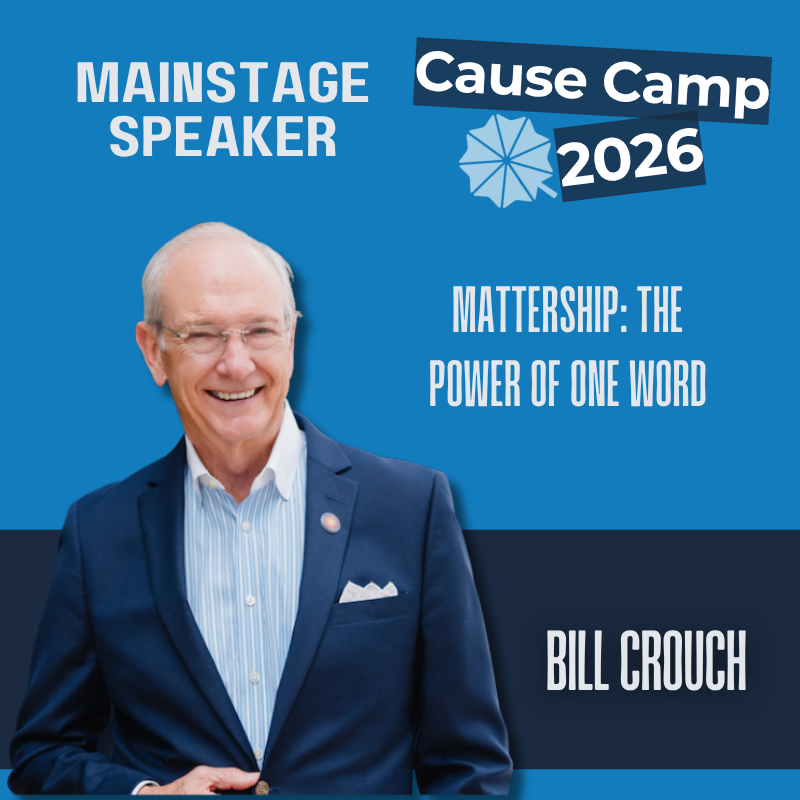
Mattership™ is a fundraising philosophy that redefines how to think about giving and donor engagement. At its core, Mattership recognizes that people give not because they are asked, but because they feel seen, valued, and essential. It emphasizes that donors aren’t just contributors – they are changemakers whose gifts spark ripple effects that transform lives, communities, and futures. By cultivating a sense of mattering, organizations can deepen engagement, foster loyalty, and inspire long-term generosity. Mattership combines powerful storytelling, personalized experiences, and intentional recognition to reimagine donor support from a transaction into a transformation. The topic of Mattership is a natural fit for Cause Camp. Developed by Bill Crouch, Mattership is a unique concept, going beyond traditional fundraising strategies to focus on the human and emotional heart of philanthropy. Nonprofit leaders and fundraisers will gain actionable insights into creating cultures of mattering within their organizations, strengthening relationships with donors, and inspiring community-wide impact. By exploring the principles of Mattership, attendees will learn how to unlock greater generosity, build resilient teams, and ensure that every act of giving contributes to lasting change.
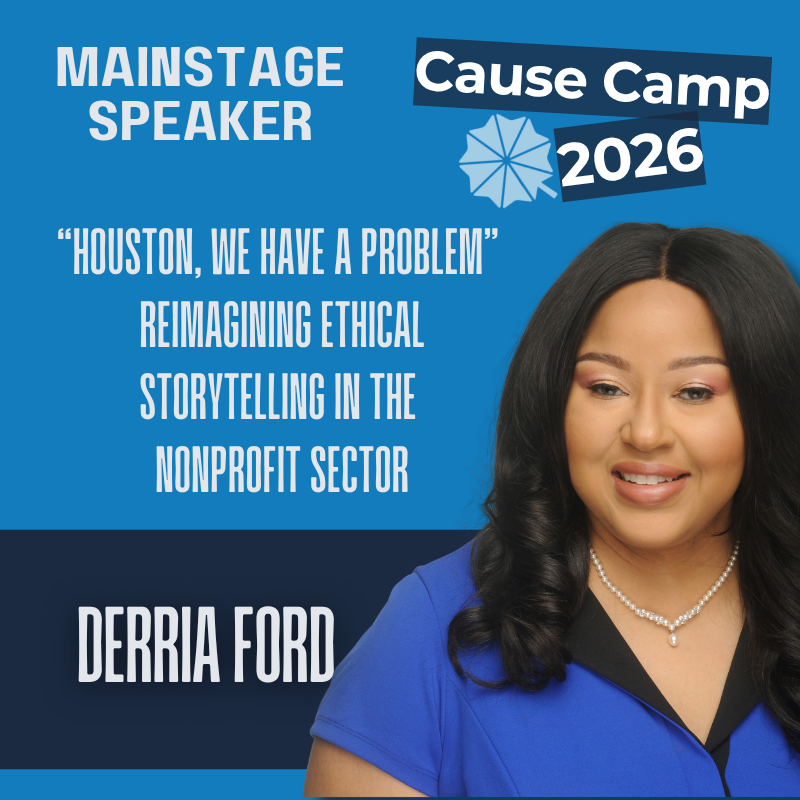
Nonprofits are under constant pressure to produce compelling stories that drive engagement and revenue. Yet many organizations rely on informal practices or good intentions when it comes to how stories are sourced, shared, and stewarded. Without clear policies and internal alignment, storytelling can unintentionally cross ethical lines, compromise trust, or place undue burden on the very communities we aim to serve. This session explores how organizations can move beyond one-of conversations about ethics and begin building a departmental framework for ethical storytelling that is sustainable, repeatable, and mission-aligned. Participants will learn how to embed consent-based practices, dignity-centered language, and shared decision-making into development, marketing, and program operations. We will discuss practical tools, including storytelling consent processes, internal review protocols, staff training approaches, and cross-department collaboration strategies that protect both participants and organizational integrity.
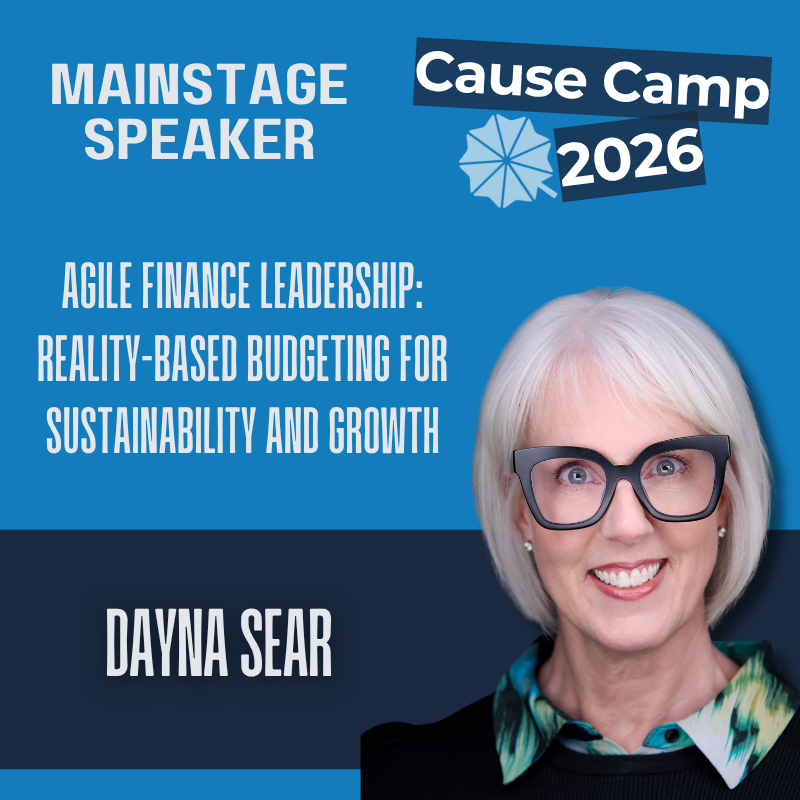
As a leader of a nonprofit organization, you understand uncertainty. It has become more complex and more embedded in daily operations. Economic volatility, regulatory pressure, workforce fragmentation, and accelerating technology shifts are no longer temporary disruptions; they are structural realities. Forward-looking nonprofit leaders are no longer asking only “what if?” They are asking how to make smarter decisions faster, with better data and fewer blind spots. This session introduces an agile finance leadership framework that moves beyond static annual budgets and reactive cost control. Participants will explore how to flex between defensive and growth-oriented strategies, build optionality into financial models, and translate environmental signals into action in days rather than quarters. Participants will learn how to define their true minimum sustainable operating cost, model expansion when new information emerges, strengthen reserve strategy, align finance with operations and strategy, and evaluate technology as strategic infrastructure rather than discretionary spending. The session also addresses workforce stability as a financial variable, highlighting how culture, flexibility, and tech-enabled systems directly impact sustainability.
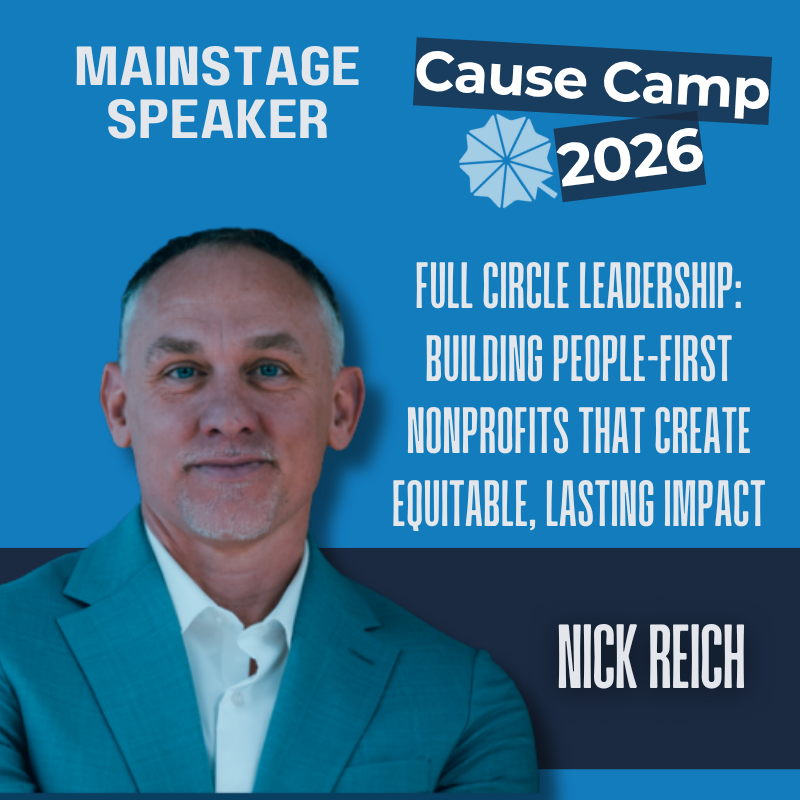
Nonprofits are built on purpose, but they often run on exhaustion. As the former CEO or Executive Director of three nonprofit organizations, and having supported dozens more in a consulting capacity, I have seen leaders navigating burnout and exhaustion around the world. Mission-driven leaders are facing funding instability, staff turnover, equity commitments, and increasing community need. In response, many organizations double down on strategy, metrics, and efficiency. But stronger systems without stronger leaders only accelerate fatigue. This session introduces Full Circle Leadership, a practical framework for nonprofit leaders who want to create impact without sacrificing their people. Cause Camp gathers leaders who care deeply about impact. This session equips them to lead in a way that sustains it.
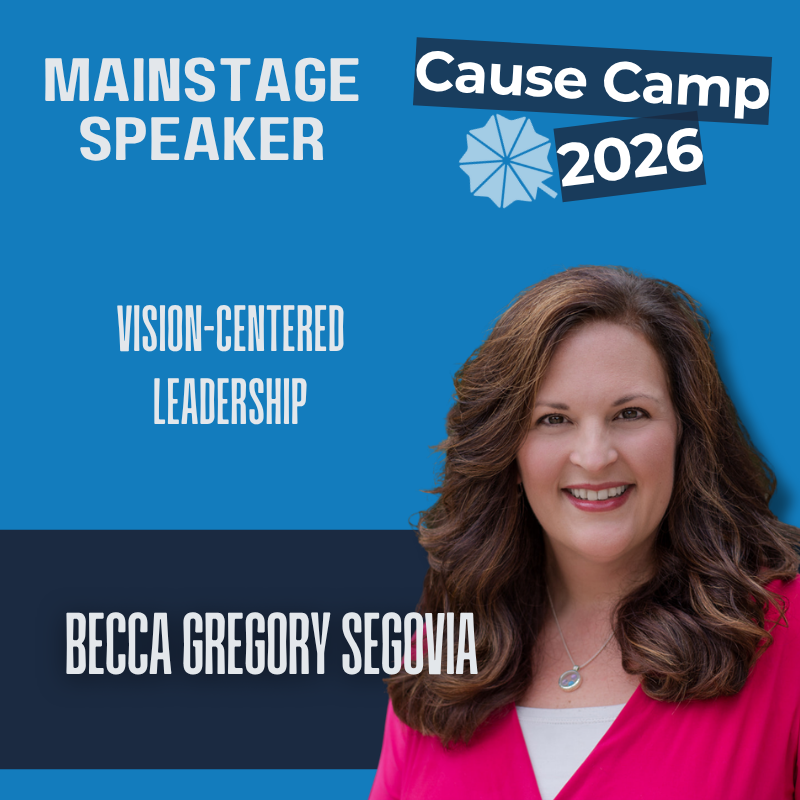
Fundraising doesn’t stall because leaders aren’t trying. It stalls when vision stays unspoken. In this session, Becca Gregory Segovia introduces Vision-Centered Leadership as a practical way to create clarity, alignment, and donor trust without adding more tactics or pressure. Participants will explore how leadership behavior shapes fundraising momentum, why clarity matters more than urgency, and how small shifts in communication and decision-making unlock sustainable growth. Attendees will leave with a clear leadership lens and one immediate shift they can apply to support more focused, human, and efective fundraising Proof it works: Used with nonprofit teams facing stalled growth, this approach replaced reactive fundraising with clear vision, aligned priorities, and stronger donor focus. Momentum improved through clarity and ownership, not new tactics.
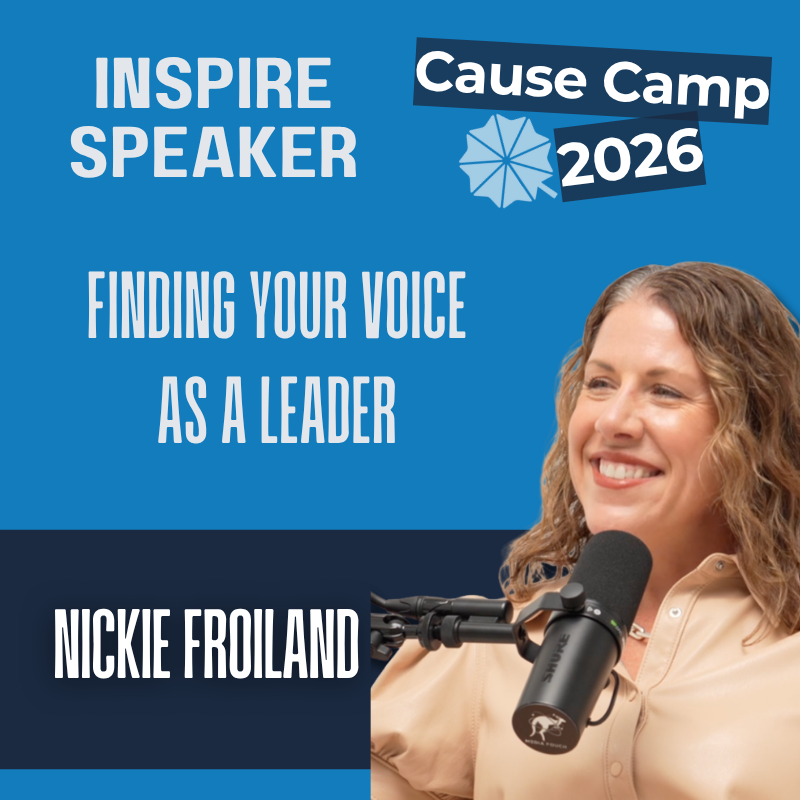
Over the last 20 years, I’ve worked alongside founders, CEOs, and nonprofit leaders who care deeply about their mission but feel the weight of complexity as their organizations grow. As expectations rise and decisions carry more consequence, it becomes harder to rise above the day-to-day pressure and lead with clarity. I’ve seen firsthand that the leaders who navigate complexity with confidence are the ones who have done the internal work to find and trust their voice. Finding Your Voice as a Leader is about helping leaders cut through noise, align their decisions with their values, and communicate with clarity and conviction. I’ll share practical frameworks I use in my advisory work to help leaders sharpen their vision, strengthen alignment within their teams, and build the mindset required to lead sustainably. Cause Camp 2026 is focused on helping leaders take their mission to the next level. That is the foundation of my work and my motivation behind starting Motus9. When leaders trust their voice, they create healthier teams, stronger execution, and more meaningful impact in the communities they serve.
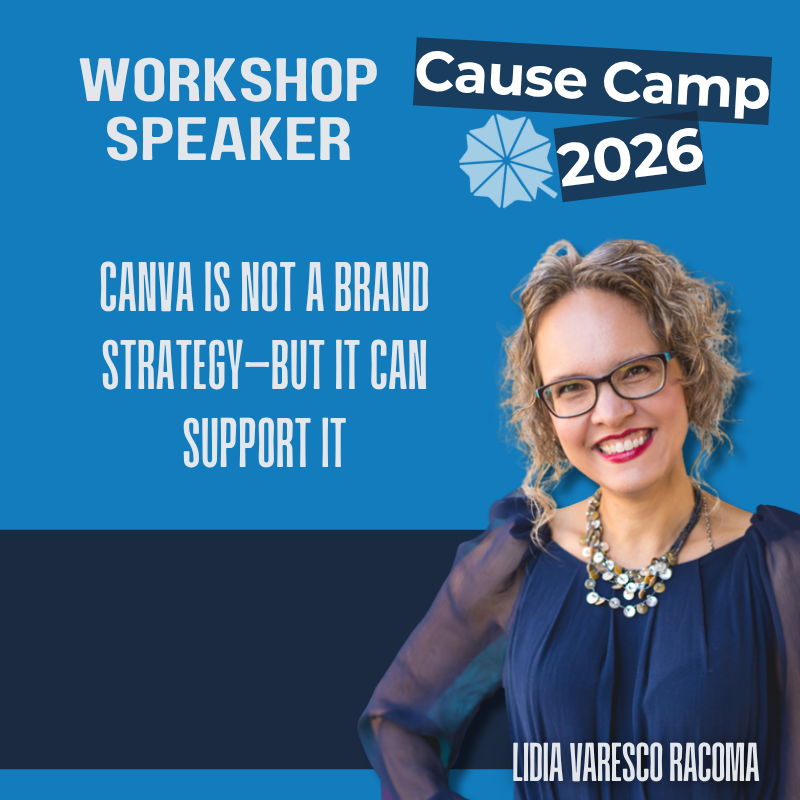
Organizations often already have the elements of a strong brand strategy – mission, audience, and impact – but have not documented how it connects across their fundraising, programming, and marketing efforts. This practical session will show nonprofit leaders how to identify and organize the brand strategy they already use every day into a simple, shared framework. We will explore how documenting your organization’s WHO, WHAT, and WHY can support more aligned messaging across appeals, events, newsletters, and social media.
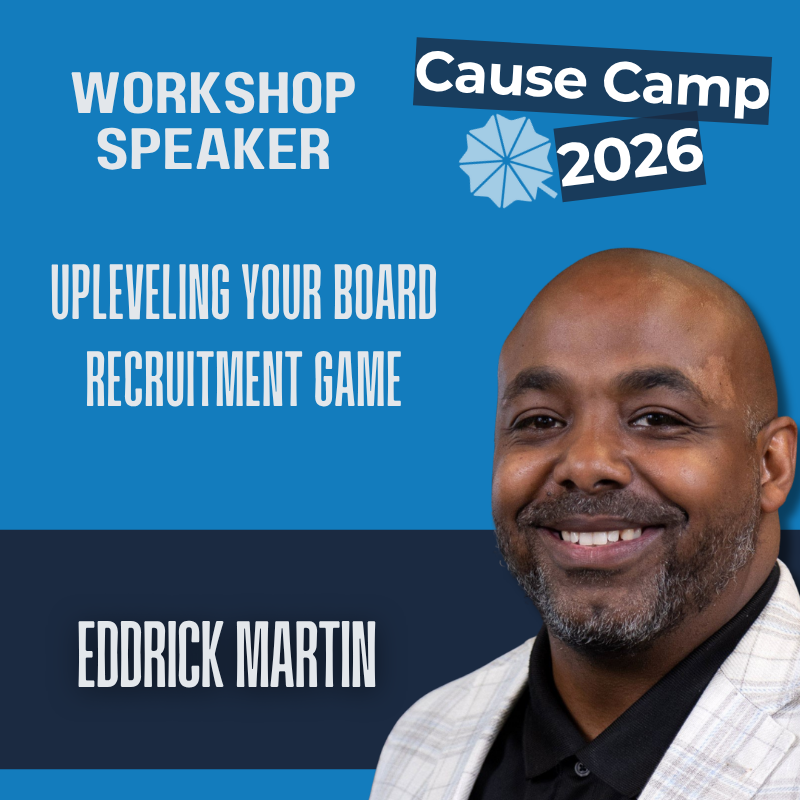
Participants will be guided through our board development framework and leave with tools they can apply right away. We will focus on defining the right board member profile for their mission and current priorities, establishing a realistic recruitment timeline, and building a repeatable process that does not depend on last-minute urgency. Participants will also learn how to structure a board development committee with clear roles, accountability, and a chart of work that supports consistent progress. The session connects recruitment to the organization’s strategic plan, bylaws, and initiatives so board composition is aligned with where the organization is going, not just where it has been.
I’ve heard so many friends and colleagues rave about Cause Camp and I’d love the opportunity to develop this session for your unique audience and environment. I’ve spent a lot of time thinking about this topic through different roles (Development Director, board member, consultant, etc.). A strong, integrated fundraising program is typically recognized for immediate revenue value. We can expand that lens within fundraising to building a major donor-pipeline and planned giving. Beyond fundraising, and just as importantly, it helps with brand marketing, public education, advocacy, and program growth. When done well, direct marketing / integrated fundraising is a connective tissue across an organization, well beyond the transaction many people think about. I don’t often get to speak from this wider perspective at conferences, but I think Cause Camp is an ideal environment to explore it. My goal is ultimately to increase the impact of the organizations in attendance, and short-term my hope is to spark conversation across fundraising, marketing, and leadership roles.
Starting a nonprofit often means wearing every hat at once-fundraising, programming, marketing, and governance-so program evaluation is frequently pushed into the “we’ll deal with that later” category. This session challenges that mindset by reframing evaluation as a foundational startup activity rather than a future add-on. From defining outcomes early to setting up simple data habits, participants will learn how thinking about evaluation on day one actually saves time, strengthens programs, and makes fundraising easier down the road. Designed with a “so you started a nonprofit… now what?” lens, this presentation offers practical, startup-friendly strategies that don’t require extra staff, expensive tools, or technical expertise. Attendees will leave with clear next steps for building learning, accountability, and impact into their organization from the very beginning-before the first grant, report, or annual appeal.
As leaders and nonprofit organization staff members, we are constantly responding to urgent community needs, shifting public narratives, and emerging innovations. At the same time, our organizations are striving to deepen impact, expand reach, and create meaningful, lasting change. The question is not whether we want to innovate, it is how we do so effectively. This session will focus on using methodology tools rooted in empathy to find more efficiency within programs and to maximize impact. Participants will learn how Human-Centered Design and Lean Thinking can emphasize empathy for impact, challenge us to design programs and strategies from the perspective of the people we serve and the teams who deliver the work.
Many nonprofit leaders are curious about AI but feel overwhelmed by jargon, tools, and competing opinions. This session demystifies AI by showing how it can be used today to analyze past campaigns, surface meaningful insights, and drive smarter decisions without adding complexity or sacrificing trust. Cause Camp attendees are looking for ideas they can actually take home and use. This session provides hands-on examples, ethical guardrails, and clear next steps that help teams work smarter, automate the busywork, and refocus their energy on building authentic donor relationships.
Coming Soon
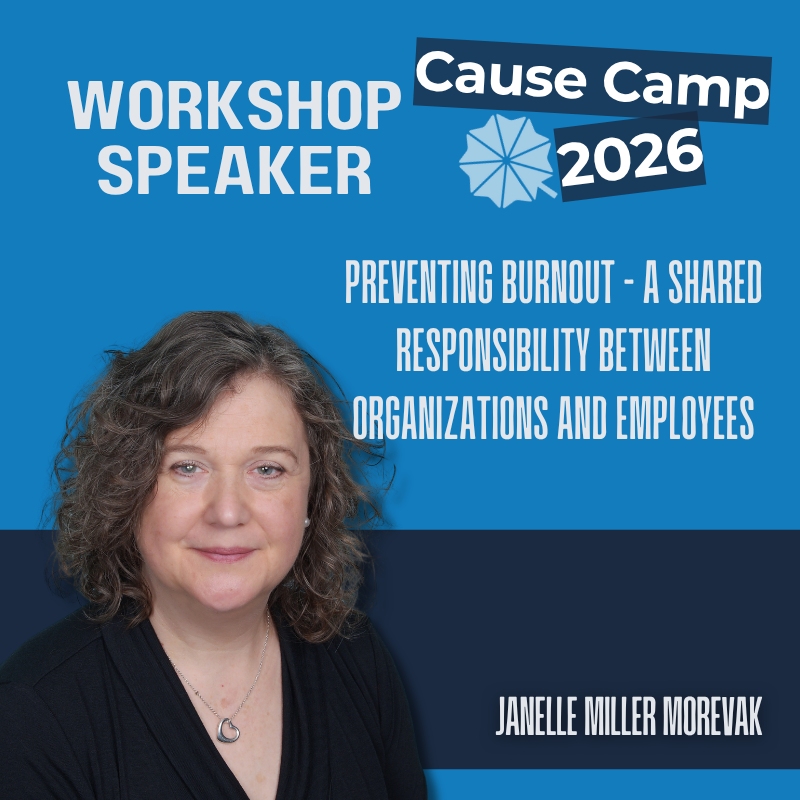
Nonprofit workers are always at risk of burnout – especially now with more demand and fewer resources. This comes at a time when our world needs us the most. My presentation will provide an overview of the causes and symptoms of burnout and then offer strategies for organizations and individuals to use to prevent burnout. I know these work – I have done them at my organization and have seen turnover decline and better organizational outcomes.
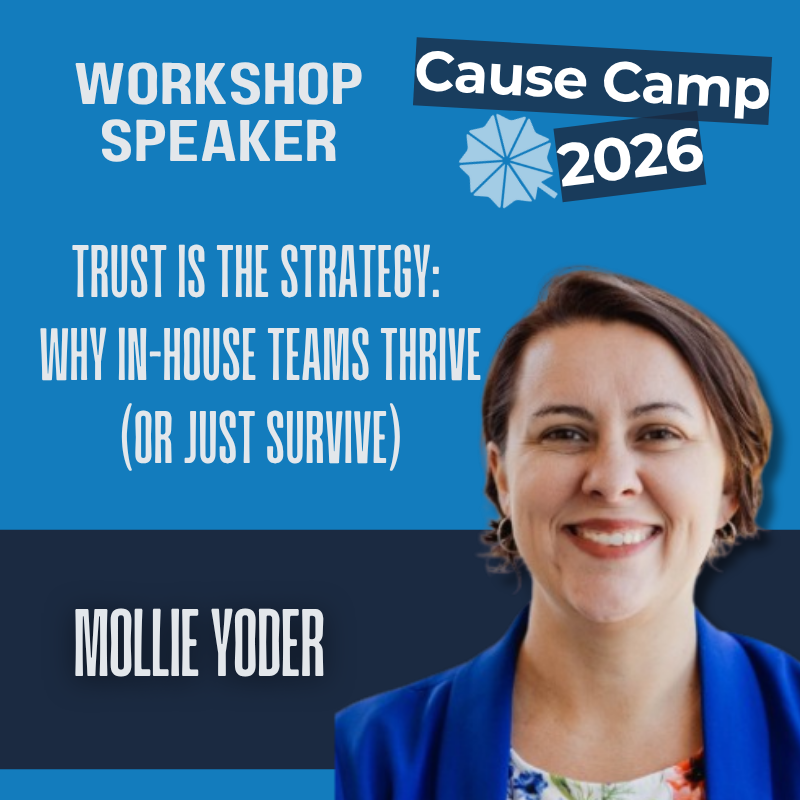
Your in-house team can have strong talent, solid tools, and a well-crafted strategy – and still feel stuck. In this fast-paced, practical session, Mollie Yoder explores how trust functions as the leading indicator of alignment and performance inside organizations. Drawing from executive experience and current research, she reveals how subtle perception gaps between leadership and teams create friction that quietly taxes momentum. Participants will learn where trust breakdowns most commonly show up between leadership, stakeholders, and creatives; how perception gaps stall execution long before revenue reflects it; and the specific shifts that increase clarity, coordination, and forward velocity. They will walk away understanding how trust fuels alignment – and how alignment accelerates growth. Because trust is not soft. It is structural.
